Tree Care Checklist for Abilene Rental Properties
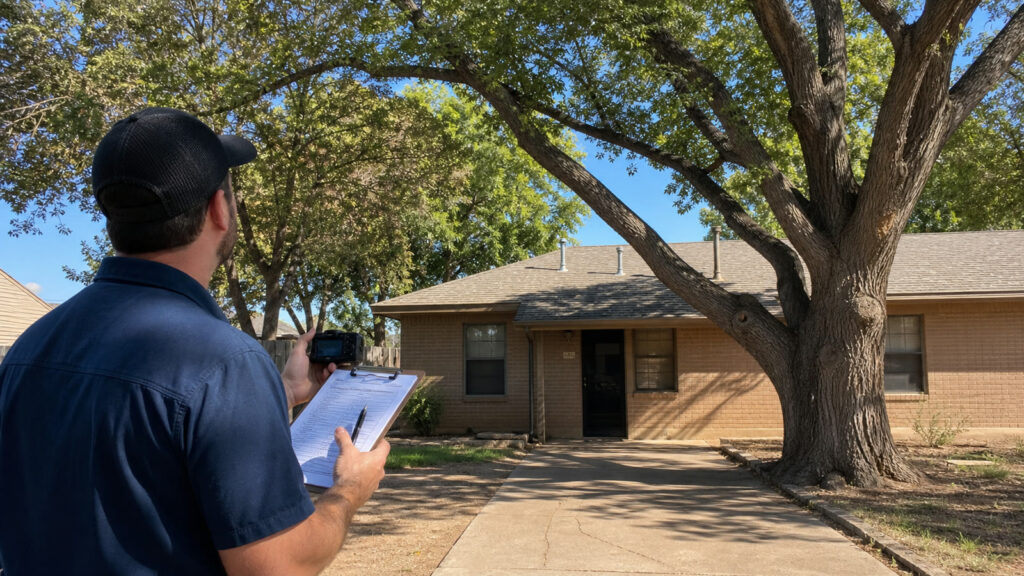
Rental-property tree care works best with documented inspections, clear reporting by occupants, and prompt correction of dead limbs, blocked access, or storm damage.
How to Keep Hedges Healthy in Abilene’s Climate
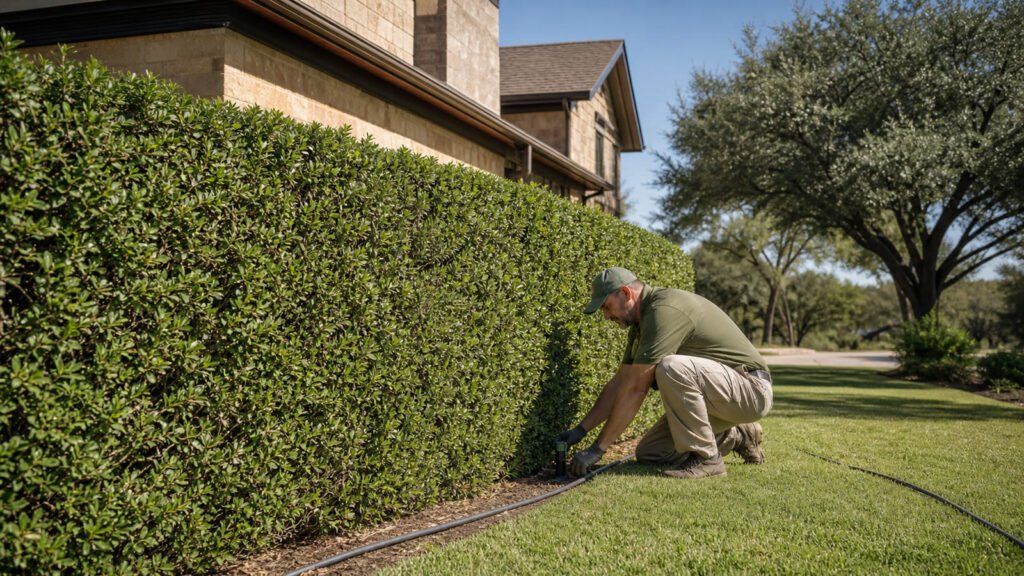
Healthy Abilene hedges need light at the lower foliage, consistent but not excessive irrigation, and trimming that leaves the base slightly wider than the top.
Commercial Tree Maintenance Planning in Abilene
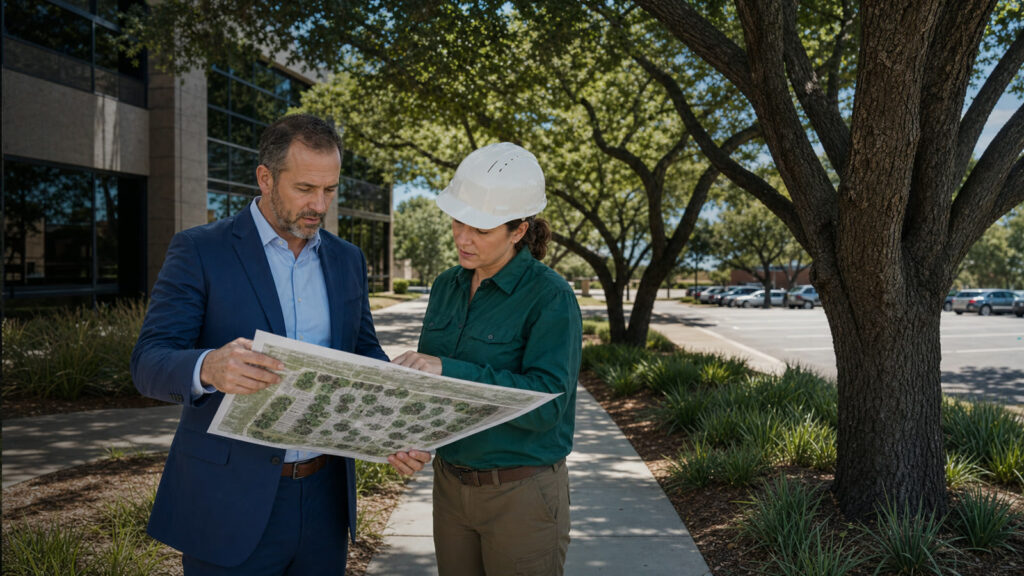
A commercial tree plan should inventory trees, rank safety and clearance needs, schedule work by priority, and document recurring inspections after storms.
Shrub Pruning Tips for Abilene Landscapes
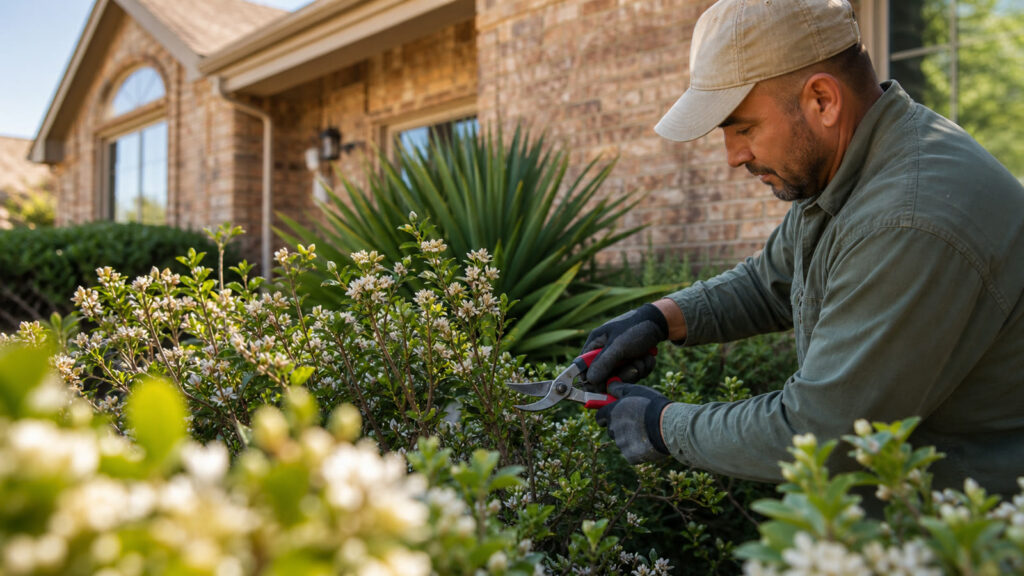
Prune shrubs according to how they grow and flower, using selective cuts to renew stems and maintain size instead of repeatedly shearing every plant into a tight shell.
Common Signs of Tree Pests in Abilene Yards
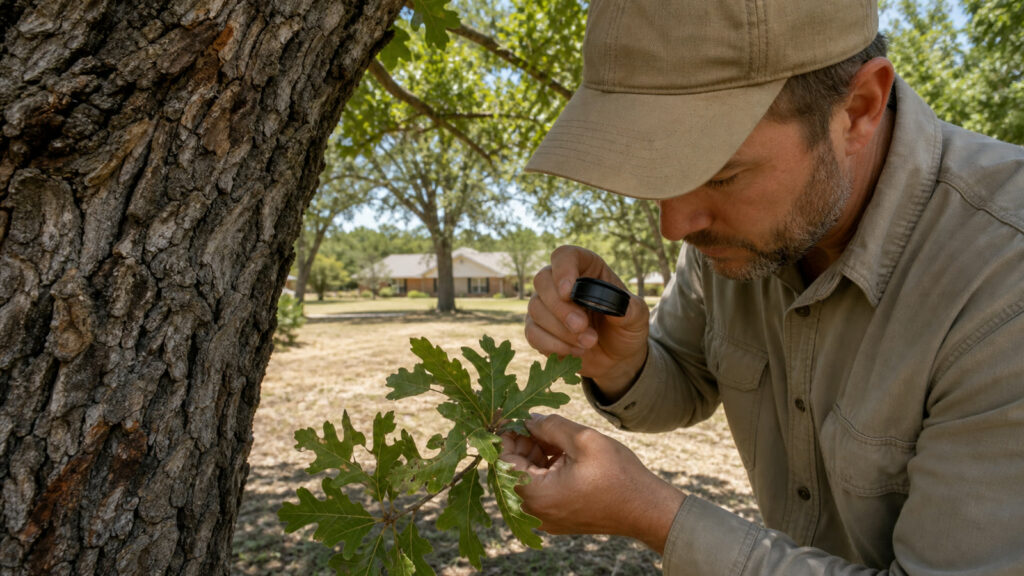
Look for a pattern of symptoms—holes, frass, scale, webbing, distorted leaves, or canopy thinning—then identify the tree and likely cause before choosing treatment.
How to Spot Tree Disease Problems in Abilene
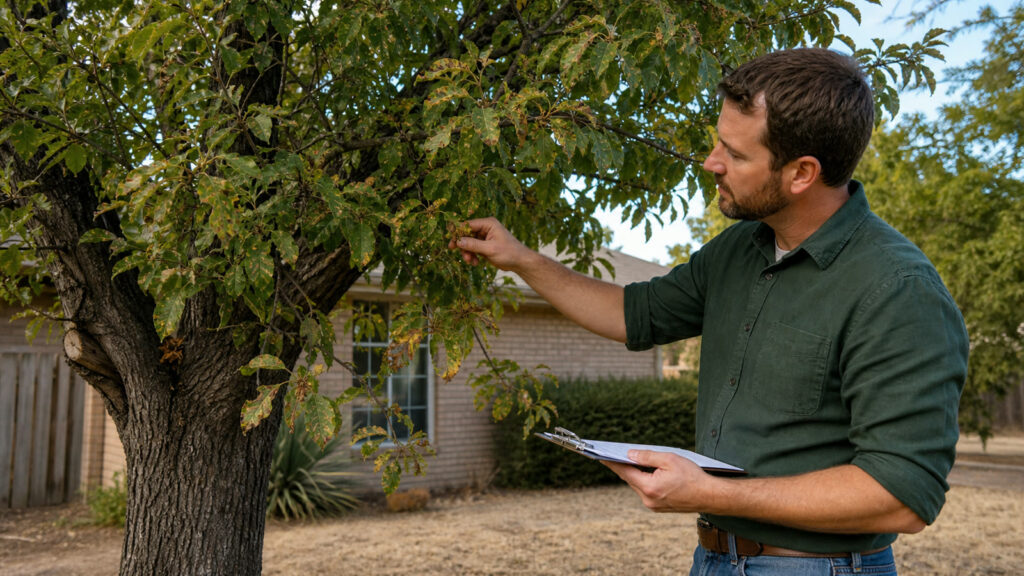
Tree disease diagnosis depends on the host, symptom pattern, site conditions, and timing; photographs and samples are more useful than treating every brown leaf alike.
Freeze-Damaged Trees in Abilene: When to Prune
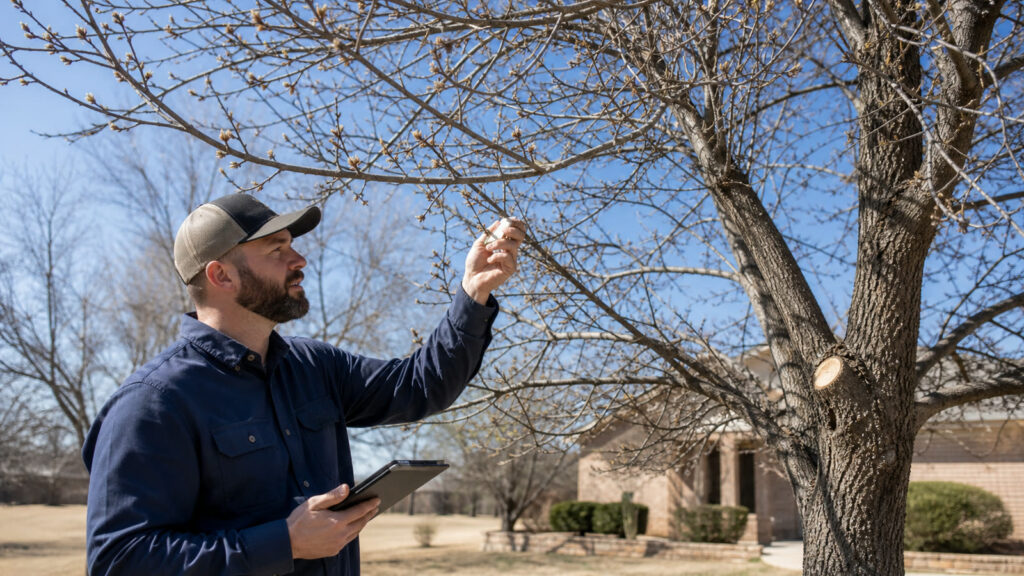
Wait until live growth clearly separates from dead tissue before making major freeze-damage cuts, unless a broken branch creates an immediate hazard.
Heat Stress in Abilene Trees: What Homeowners Should Know
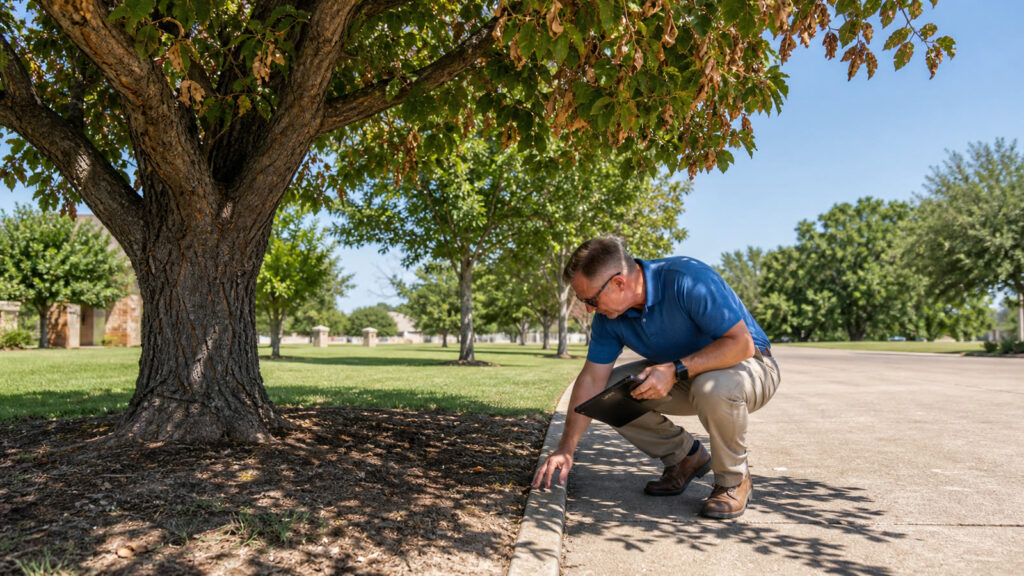
Heat stress often appears as curling, scorching, or premature leaf drop, especially where roots are dry, compacted, or surrounded by reflected heat.
Drought-Stressed Trees in Abilene: Signs and Next Steps
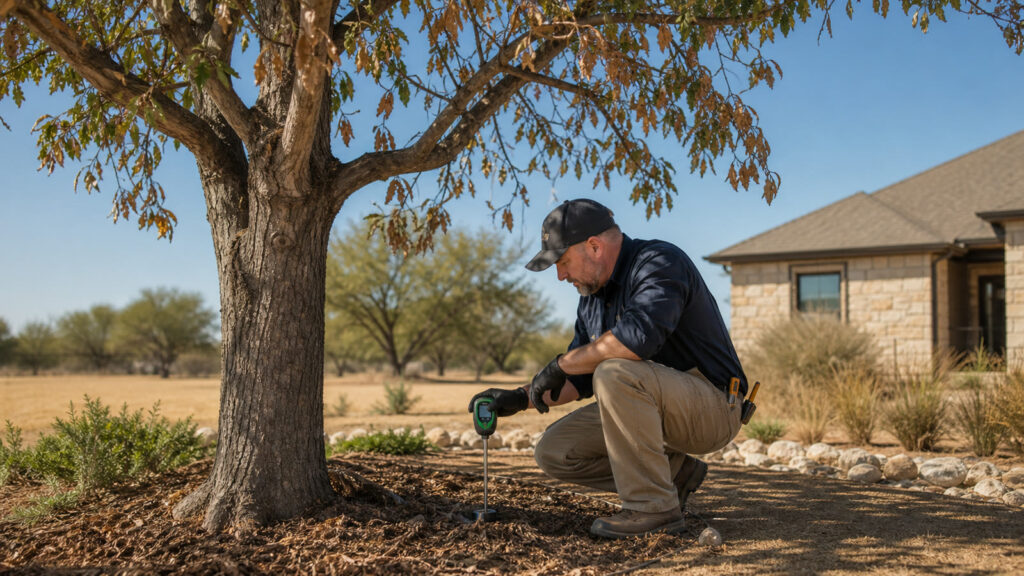
Common drought-stress signs include leaf scorch, early leaf drop, sparse growth, and twig dieback; respond with slow root-zone watering and avoid unnecessary pruning or fertilizing.
How to Water Mature Trees During Abilene Heat
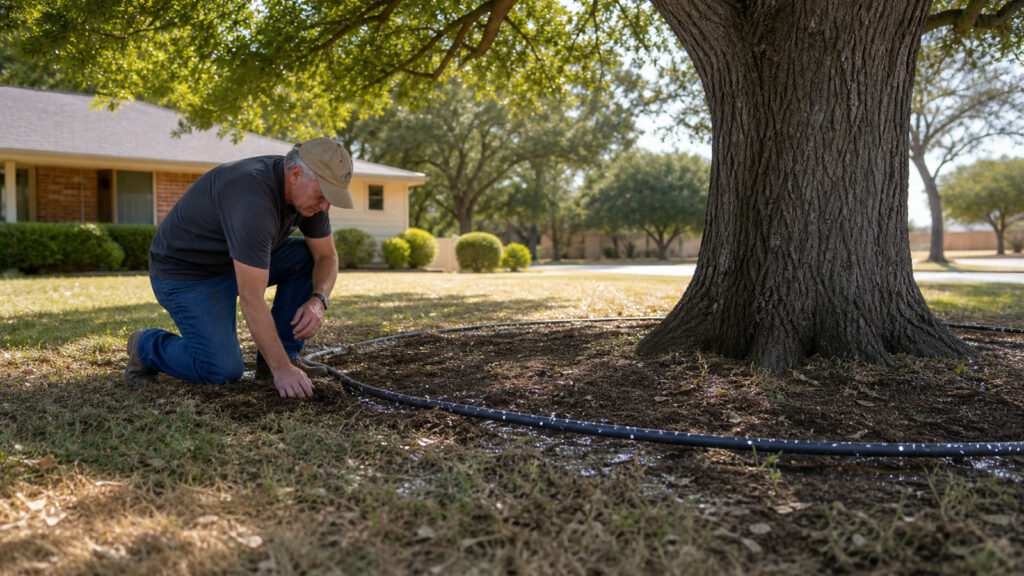
Water mature trees slowly across the absorbing-root area, not just at the trunk, and adjust frequency to soil moisture, rainfall, species, and site drainage.