Browse Tree Health resources for property owners in Abilene, Texas. This archive brings together practical tree care information related to tree health, with clear explanations written for local homes and businesses. Topics may include planning safe work, recognizing property risks, understanding seasonal maintenance, and deciding when professional assessment is appropriate. Use these articles to understand common options, identify details worth documenting, and prepare for a more productive conversation with a qualified local professional. Conditions vary by property, age, materials, weather, access, and previous work, so the guidance is educational rather than a substitute for an on-site evaluation. Review the newest articles below, compare the recommendations with what you observe at your property, and request an assessment when safety, structural performance, or long-term durability is uncertain.
Soil Compaction Around Abilene Trees: Driveways, Parking, and Construction
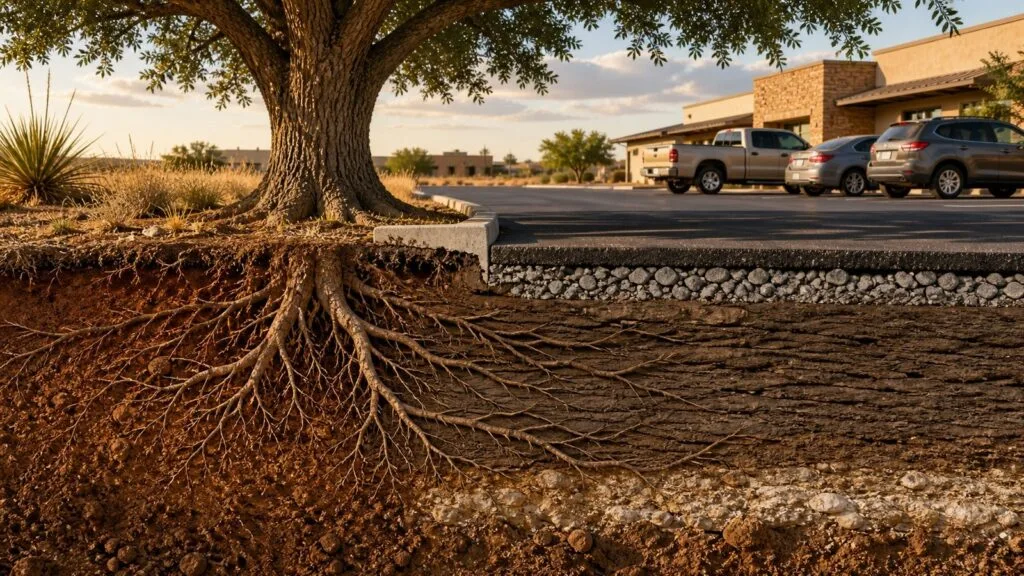
Compacted soil can quietly restrict air, water, and root growth. Use visible clues and a site-specific protection plan before driving or building near trees.
New Abilene Homeowner Tree Inspection Checklist
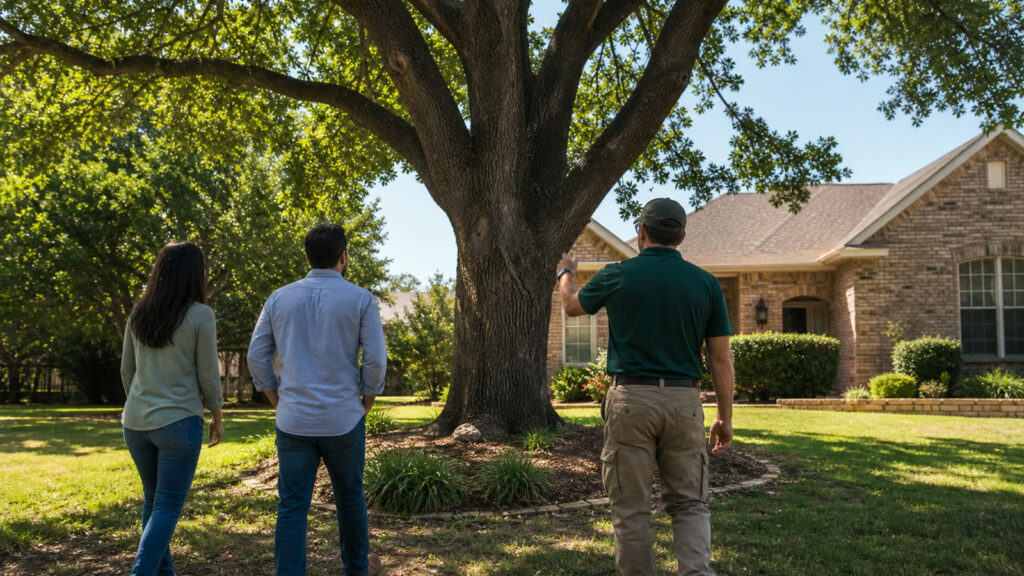
New homeowners should map large trees, photograph current condition, check trunks and root zones, and note limbs over roofs, drives, play areas, or utility corridors.
Common Signs of Tree Pests in Abilene Yards
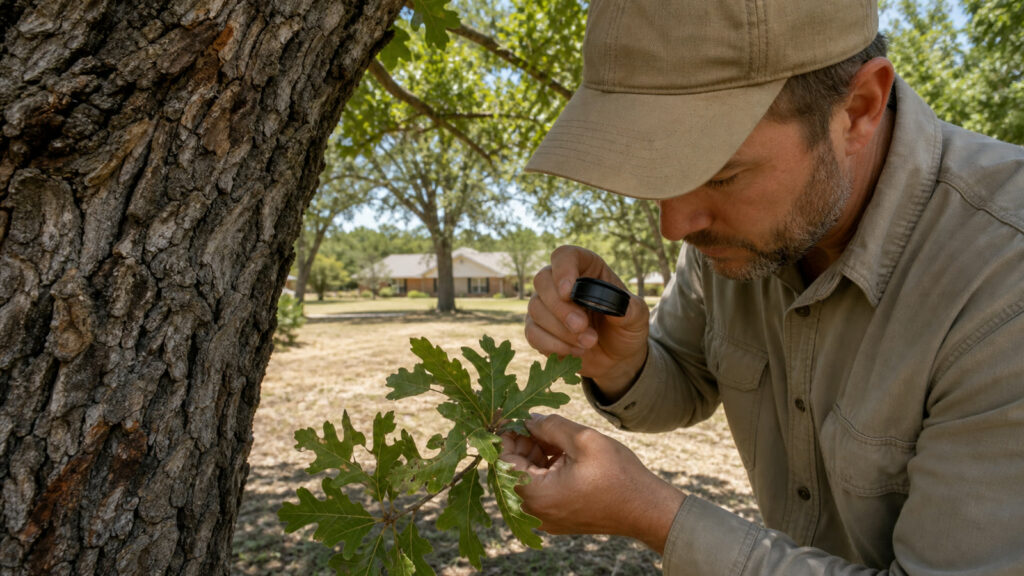
Look for a pattern of symptoms—holes, frass, scale, webbing, distorted leaves, or canopy thinning—then identify the tree and likely cause before choosing treatment.
How to Spot Tree Disease Problems in Abilene
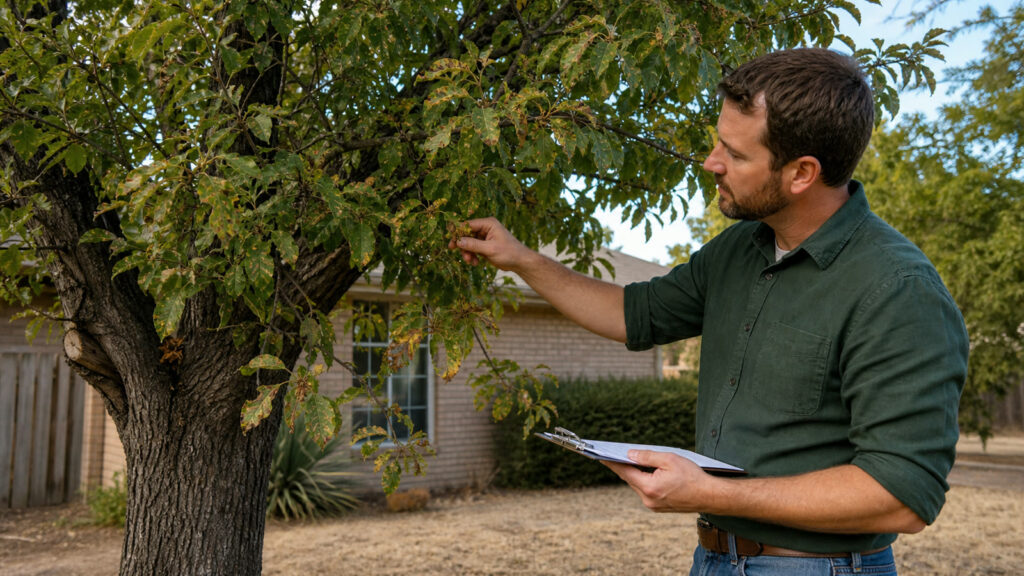
Tree disease diagnosis depends on the host, symptom pattern, site conditions, and timing; photographs and samples are more useful than treating every brown leaf alike.
Heat Stress in Abilene Trees: What Homeowners Should Know
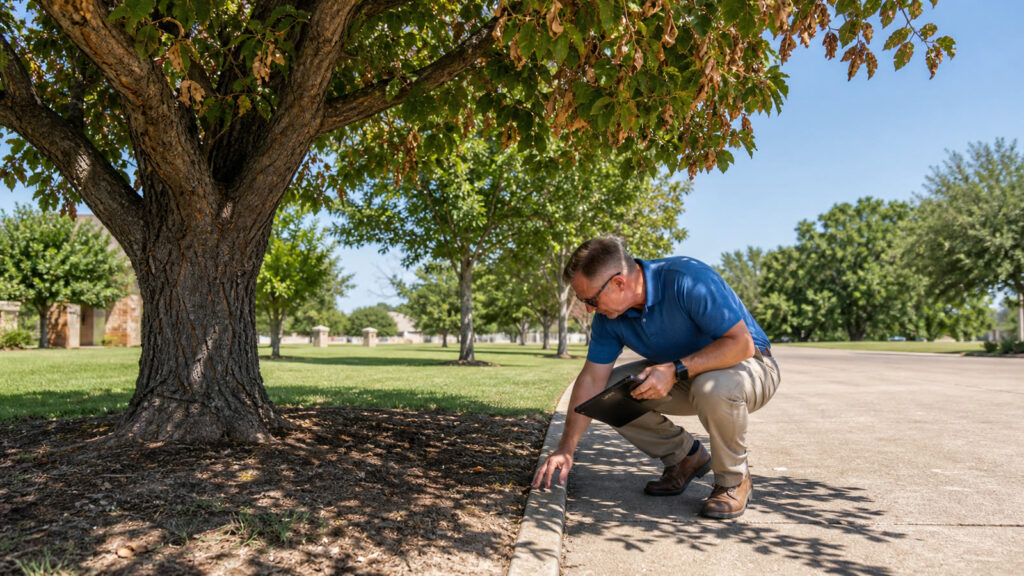
Heat stress often appears as curling, scorching, or premature leaf drop, especially where roots are dry, compacted, or surrounded by reflected heat.
Drought-Stressed Trees in Abilene: Signs and Next Steps
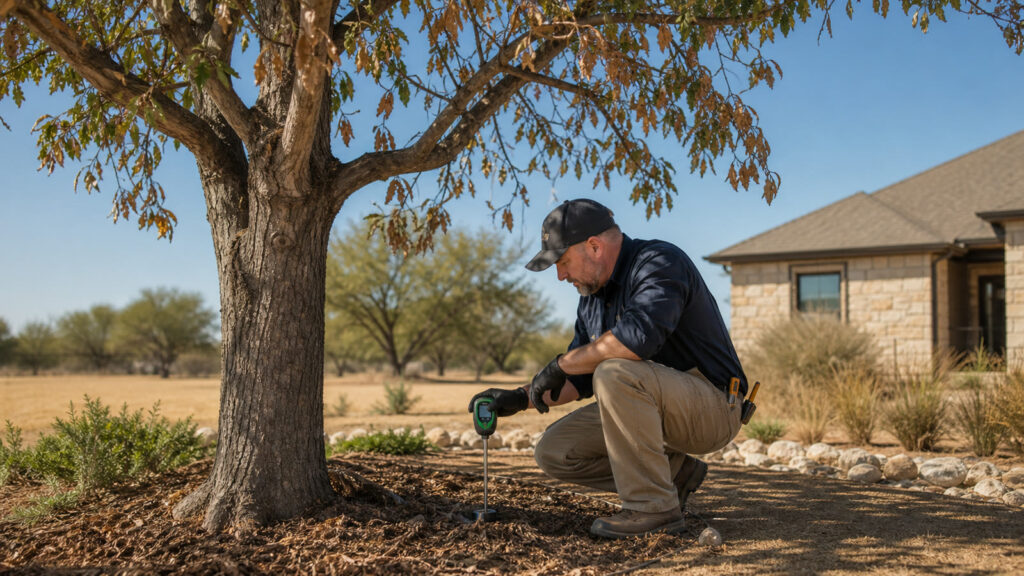
Common drought-stress signs include leaf scorch, early leaf drop, sparse growth, and twig dieback; respond with slow root-zone watering and avoid unnecessary pruning or fertilizing.
How to Water Mature Trees During Abilene Heat
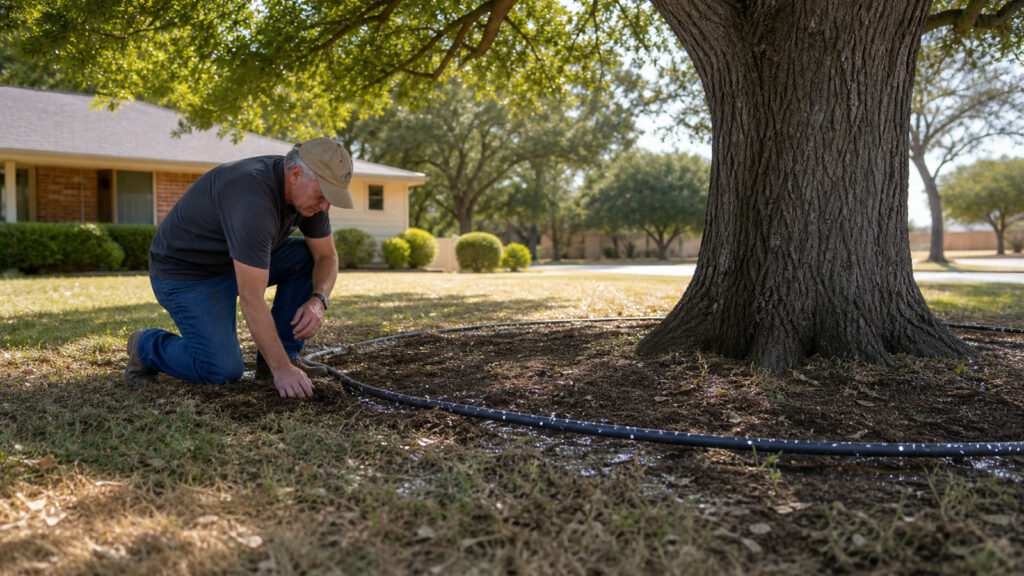
Water mature trees slowly across the absorbing-root area, not just at the trunk, and adjust frequency to soil moisture, rainfall, species, and site drainage.
A Homeowner’s Tree Risk Checklist for Abilene
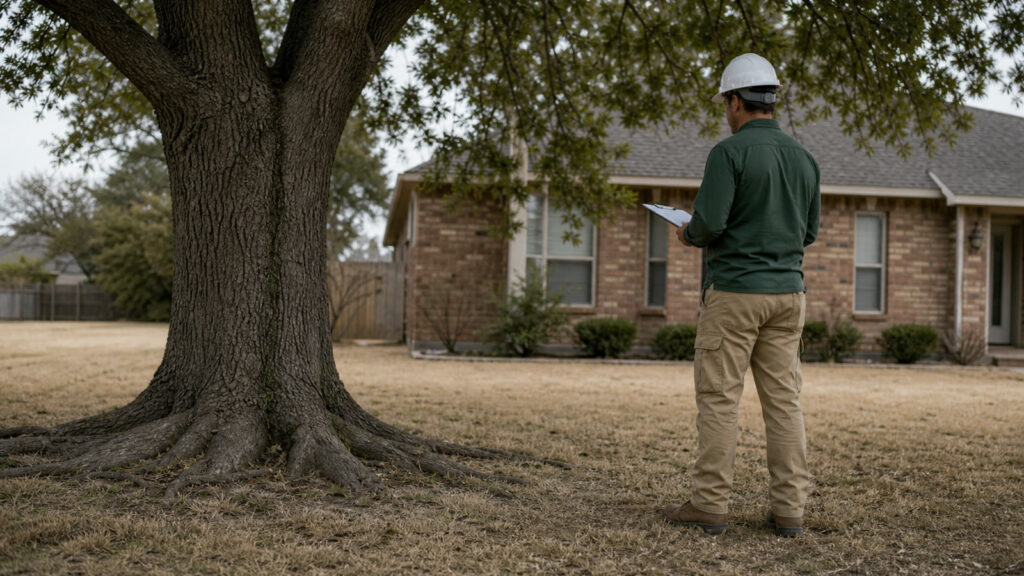
A useful tree-risk check looks at both the defect and the target: cracks, decay, lean, and dead limbs matter most where people, buildings, or vehicles could be struck.
Can Tree Roots Damage Foundations in Abilene?
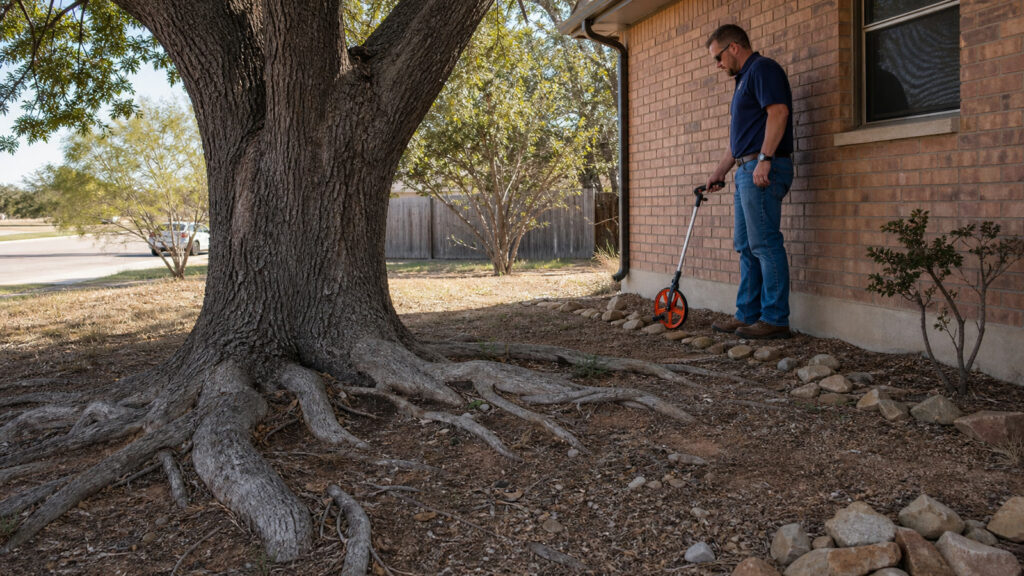
Roots and foundations interact through soil, moisture, distance, and existing defects; visible roots alone do not prove that a tree caused structural damage.
Cedar Elm Care in Abilene: A Practical Homeowner Guide
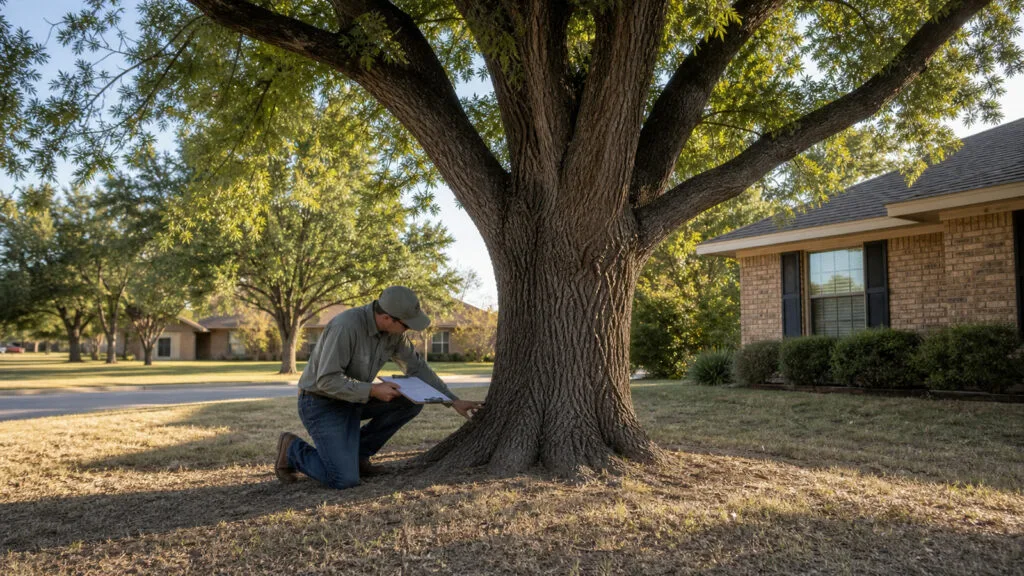
Cedar elms generally benefit from deep watering during prolonged dry periods, mulch kept off the trunk, and periodic inspection for weak attachments or dieback.